
Not every worship space is a grand sanctuary with vaulted ceilings and rows that stretch back one hundred feet. Many of the most powerful worship experiences happen in smaller, quieter rooms where the scale itself invites something different. A hospital chapel. A prayer room tucked behind the main auditorium. A campus ministry space or a church plant finding its footing in a leased building. These spaces carry their own sacred weight, and the seating inside them should honor that rather than fight against it. At Chairs for Worship, we have spent nearly three decades helping congregations across the United States think through exactly these kinds of decisions. We know that no two worship spaces are alike, and that the right seating choice in a 1,200-seat sanctuary is almost never the right choice in a 40-seat chapel. As a veteran-owned and operated company, we bring a commitment to getting the details right every time, and we genuinely love sitting with church leaders early in the planning process to help them find seating that truly fits their space, their congregation, and their vision.
Choosing the Right Church Seating for Small Chapels, Prayer Rooms, and Intimate Worship Spaces
The conversation about chapel seating versus large sanctuary pews is really a conversation about purpose, scale, and the kind of experience you want people to have the moment they walk in the door. Getting that right starts with understanding what makes these two environments fundamentally different from each other.
Scale Changes Everything About How Seating Feels
In a grand sanctuary designed to seat several hundred people, the architecture itself does a significant portion of the work. High ceilings create a sense of reverence. The visual depth of long rows communicates that this is a gathering place for something larger than any individual. Seating in those spaces can carry more visual weight, because it shares the room with dramatic architectural elements that balance it.
A chapel operates on entirely different principles. The room is smaller, which means every element inside it has proportionally more visual impact. Seating that feels appropriately scaled in a large sanctuary can overwhelm a chapel, making the space feel crowded, heavy, or institutional rather than warm and welcoming. Conversely, seating that is too light or too casual can undercut the sense of reverence a chapel is meant to carry.
The practical implication is that chapel seating needs to be sized and styled with the specific dimensions of the room in mind, not simply selected from the same catalog page as the main sanctuary order. Seat width, back height, overall visual profile, and even the finish tone of the frame all read differently at close range, and in a chapel, everything is at close range.
Intimacy Is a Design Goal, Not Just a Feeling
When people describe a chapel as intimate, they are usually pointing at something specific without quite naming it. The room does not ask them to perform their faith in front of a crowd. It gives them permission to be quiet, to sit with something difficult, to pray without the ambient energy of a full congregation around them.
Seating plays a direct role in creating or undermining that feeling. Chairs that can be arranged in a circle or a gentle arc serve a different pastoral function than rows locked in a forward-facing configuration. Flexibility matters in chapel environments precisely because the uses of the space are more varied. A chapel might host grief support gatherings one week, a small baptism the next, a quiet noon prayer service the week after that. Seating that can be easily reconfigured by one or two people without heavy lifting or storage hassle supports that ministry versatility in a practical, everyday way.
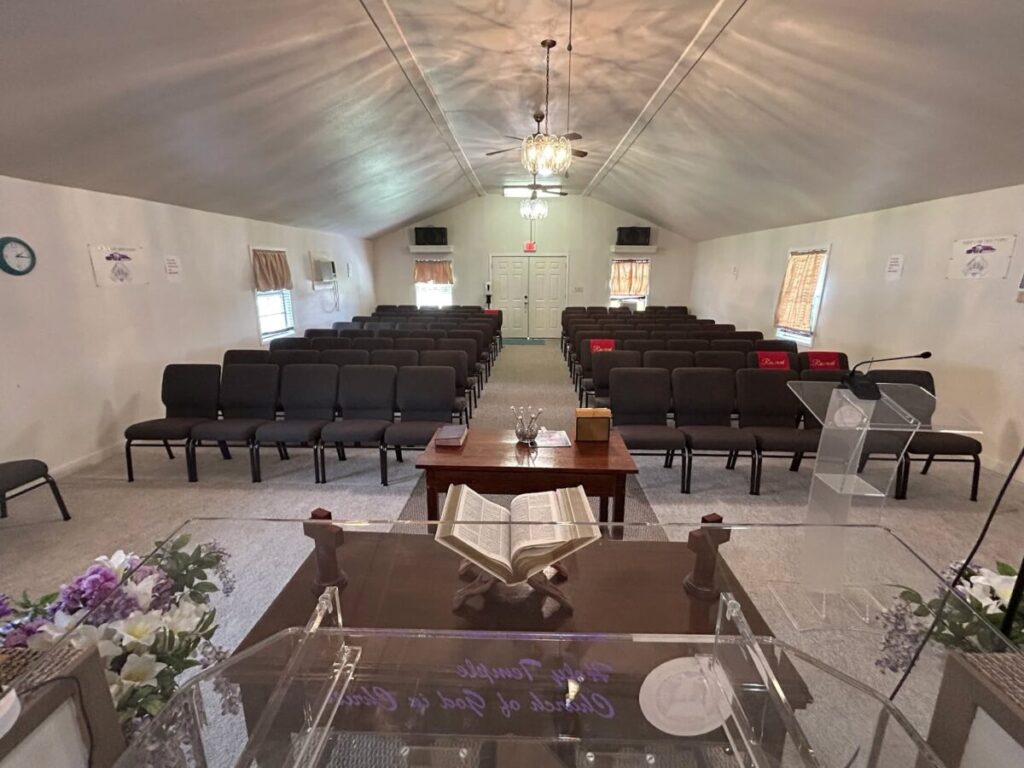
Chairs for Worship offers stackable worship chairs in a range of profiles and finishes specifically suited to smaller, multi-use spaces. Lightweight enough for easy reconfiguration, durable enough for years of daily use, and available in fabric and frame options that feel at home in an intimate setting rather than borrowed from a much larger room.
Wood Versus Metal Frames in Chapel Environments
The choice between wood and metal frame seating carries different weight in a chapel than it does in a contemporary multi-purpose sanctuary. In intimate worship spaces, especially those with traditional architectural details or natural materials like stone, brick, or stained wood millwork, a wood frame chair reads as belonging in a way that a powder-coated metal frame simply may not.
Wood worship chairs bring warmth, natural variation, and a visual softness that complements the contemplative character of a chapel. The grain of the wood, the warmth of a stained finish, the way light falls across a curved back piece, these are details that matter when the room is small enough for people to notice them.
That said, metal frame options remain highly practical for chapels that serve multiple functions or handle high daily traffic. A hospital chapel, a university prayer room, or a funeral home meditation space may prioritize durability and ease of maintenance over traditional warmth. The answer is not one material over the other universally, but a clear-eyed look at how the space is actually used and what the congregation or community coming through the door most needs to feel.
Cushioning Considerations in High-Use Small Spaces
Chapel seating often sees more varied and more frequent use than a main sanctuary, which makes cushion quality and fabric durability especially important. A chair that hosts multiple services, support groups, counseling sessions, and private prayer moments in a single week accumulates wear faster than a chair used primarily for a single weekly service. High-density commercial foam and tightly woven, high-cycle upholstery fabrics are not just luxuries in these environments. They are the difference between seating that holds up gracefully and seating that visibly deteriorates within a few years.
Capacity Planning for Chapel Spaces
One of the most common mistakes in chapel seating projects is underestimating how flexible the space needs to be across different group sizes. A chapel that comfortably seats forty in a standard row configuration may need to accommodate twelve for a grief circle or sixty-five for a standing-room memorial service. Seating that stacks cleanly, stores compactly, and sets up quickly gives the staff or volunteers managing that space genuine flexibility rather than a fixed constraint.
Chairs for Worship has helped congregations across the country think through exactly these capacity and configuration challenges, bringing nearly thirty years of experience to rooms of every size and shape. We understand that the chapel is often where some of the most important ministry moments happen, and we take seriously the responsibility of helping those rooms be everything they are meant to be.
Ready to Find the Right Seating for Your Chapel or Intimate Worship Space? Let’s Talk.
Whether you are furnishing a brand-new chapel, refreshing an existing prayer room, or rethinking the seating in a multi-use ministry space, the Chairs for Worship team is here to help you find exactly what your space needs. Request a sample, connect with one of our seating experts, or get a custom quote. Every seat matters. Let us help you get it right.