

A comfortable padded church chair combines supportive cushioning, proper seat depth and width, a well-shaped backrest, and durable upholstery that helps worshippers remain comfortable through longer services. The best church seating distributes pressure evenly without feeling too soft, supports a natural seated posture, and provides enough room for people of different sizes to sit comfortably.
At Chairs for Worship, we understand that selecting church chairs involves more than choosing a color or style. Congregations may spend extended periods sitting during sermons, music, prayer, special services, conferences, and other gatherings. The right chairs for a church sanctuary should help people stay focused on worship instead of becoming distracted by an uncomfortable seat. That is why thoughtful cushioning, support, construction, and practical features all matter. Whether a congregation is replacing older church pews, furnishing a new sanctuary, or adding flexible seating to a multipurpose worship center, understanding what creates lasting comfort can make the selection process easier.
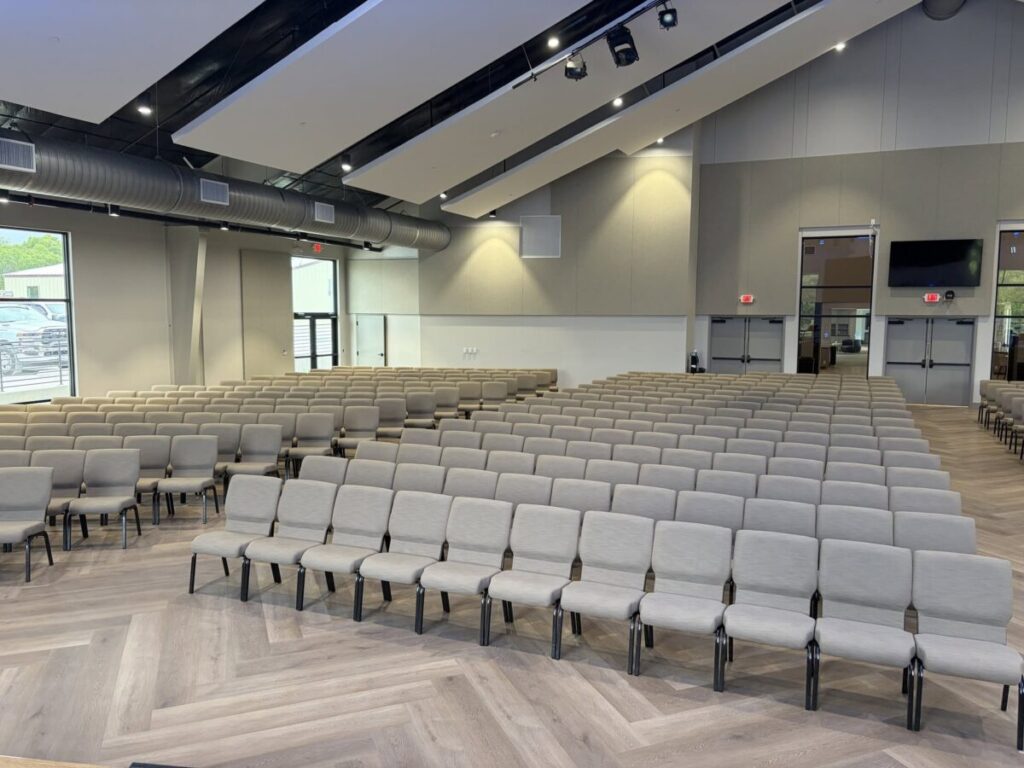
How to Choose Comfortable Padded Church Chairs for Extended Sitting
Comfortable padded church chairs should balance softness with support. A thick cushion alone does not necessarily make a chair more comfortable. Seat shape, foam characteristics, back support, dimensions, and overall construction work together to determine how a chair feels after an hour or more of sitting.
Research supports this focus on pressure distribution. A study published in the International Journal of Occupational Medicine and Environmental Health found that seat cushion contour affected pressure distribution and that subjective comfort was significantly related to average and peak pressure. In practical terms, a well-designed cushion should support the body without concentrating excessive pressure in a few areas.
How Much Padding Should a Church Chair Have?
The right padding should provide cushioning without allowing the sitter to sink excessively into the seat. A chair that initially feels extremely soft can become less comfortable during a long worship service if the cushion does not provide sufficient support.
Rather than judging a church chair by cushion thickness alone, churches should consider:
- Foam quality: The cushioning should retain its supportive qualities with repeated use.
- Firmness: Padding should provide a balance between softness and stability.
- Seat contour: A thoughtfully shaped cushion can help distribute pressure across the seated area.
- Long-term resilience: Church seating may be used several times each week for years, so the cushion should resist premature flattening.
Research on seating cushions also suggests that extremes are not necessarily better. A study indexed by PubMed comparing different foam characteristics found that cushions that were too soft or too hard reduced perceived comfort. The lesson for churches is straightforward: supportive balance matters more than simply choosing the softest padded chair available.
Why Do Seat Depth, Width, and Shape Matter?
Seat dimensions help determine whether a padded church chair feels comfortable after extended sitting. A seat that is too shallow may provide inadequate thigh support, while one that is too deep can make it difficult for some people to sit against the backrest comfortably.
Width is also important. Church sanctuary chairs should give worshippers enough personal space to sit naturally while still allowing the congregation to use its available floor space efficiently.
When comparing chairs, look for a seat design that:
- Supports the thighs without placing uncomfortable pressure behind the knees
- Provides adequate width for a range of worshippers
- Allows the user to sit against the backrest naturally
- Feels stable rather than forcing the body into an awkward position
If possible, test sample chairs for more than a few minutes. A chair that feels comfortable for five minutes in a showroom may feel very different after a full-length service.
What Kind of Back Support Makes Church Seating More Comfortable?
A supportive backrest helps worshippers maintain a more natural seated position. The goal is not necessarily the complex adjustability found in an office chair. Instead, church chairs need a back shape and angle that feel supportive to a broad range of people.
A well-designed padded or upholstered back can also make a noticeable difference during longer services. Look for a chair that allows the shoulders and back to rest comfortably without encouraging excessive slouching or pushing the sitter unnaturally forward.
Church leaders should evaluate the entire chair rather than the seat cushion alone. Research published in Human Factors has shown that chair design can significantly affect sitting pressure distribution. This reinforces an important purchasing principle: cushion, seat, backrest, and frame should function as one complete seating system.
Does Upholstery Affect Comfort During Longer Services?
Yes. Upholstery influences both the immediate feel of a chair and its long-term practicality. Upholstered church chairs should feel pleasant against clothing while also standing up to frequent services, events, and ministry activities.
When comparing upholstery, consider:
- Durability: Fabric should withstand repeated use without quickly showing wear.
- Maintenance: Easy-to-maintain materials simplify care for busy facilities.
- Breathability and feel: Upholstery should remain comfortable during extended periods of sitting.
- Appearance: Colors and textures should complement the sanctuary without sacrificing practicality.
Church furnishings are long-term investments, so durability matters alongside comfort. BIFMA, the Business and Institutional Furniture Manufacturers Association, maintains standards designed to evaluate the safety, durability, and structural adequacy of institutional and public seating. While churches should review the specific testing and specifications of any chair they are considering, asking about recognized performance testing can provide useful information when comparing options.
What Should Churches Test Before Buying New Sanctuary Chairs?
The best way to evaluate comfort is to have several people actually sit in the chair. Because congregations include people of different heights, ages, and body types, one person’s opinion should not determine the purchase.
Before ordering church chairs for a sanctuary, consider having a small group evaluate samples. Ask them to pay attention to:
- Seat firmness after extended sitting
- Support across the back
- Seat width and depth
- Ease of sitting down and standing up
- Stability and overall construction
- Upholstery feel
- Space between chairs when arranged in rows
Also consider how the chairs function in the room. Stackable church chairs may make storage and room reconfiguration easier, while interlocking church chairs can help maintain orderly rows where appropriate. Comfort is essential, but the best church seating should also support the way the congregation actually uses its facility.
Frequently Asked Questions About Comfortable Church Chairs
Are padded church chairs better for long services?
Padded church chairs are often a comfortable choice for longer services because cushioning can help distribute seated pressure and provide a softer contact surface. Cushion quality, seat dimensions, and back support are just as important as the presence of padding itself.
Is thicker foam always more comfortable in a church chair?
No. More foam does not automatically mean greater comfort. Cushion firmness, resilience, contour, and pressure distribution all affect how comfortable a chair feels during extended sitting.
Are church chairs more comfortable than church pews?
They can be, particularly when individual chairs provide supportive padding and defined personal seating space. The better choice depends on the congregation’s preferences, sanctuary design, desired flexibility, and the construction of the specific chairs or pews being compared.
What should we look for when buying padded chairs for a church?
Prioritize supportive cushioning, appropriate seat dimensions, comfortable back support, durable upholstery, sturdy construction, and features that fit the sanctuary’s layout. Whenever possible, test sample chairs for an extended period before placing a large order.
Find Comfortable Church Seating for Your Congregation
Comfortable church seating helps create a welcoming sanctuary where people can focus on worship, fellowship, and the message rather than an uncomfortable chair. By looking beyond cushion thickness and considering support, dimensions, upholstery, construction, and real-world testing, churches can choose seating designed to serve their congregation well for years.
Ready to explore padded church chairs for your sanctuary or worship center? Contact Chairs for Worship to discuss seating options that combine comfort, durability, and flexibility for your space.